
Communication Skills: 10 Essential Skills, Definition and Examples
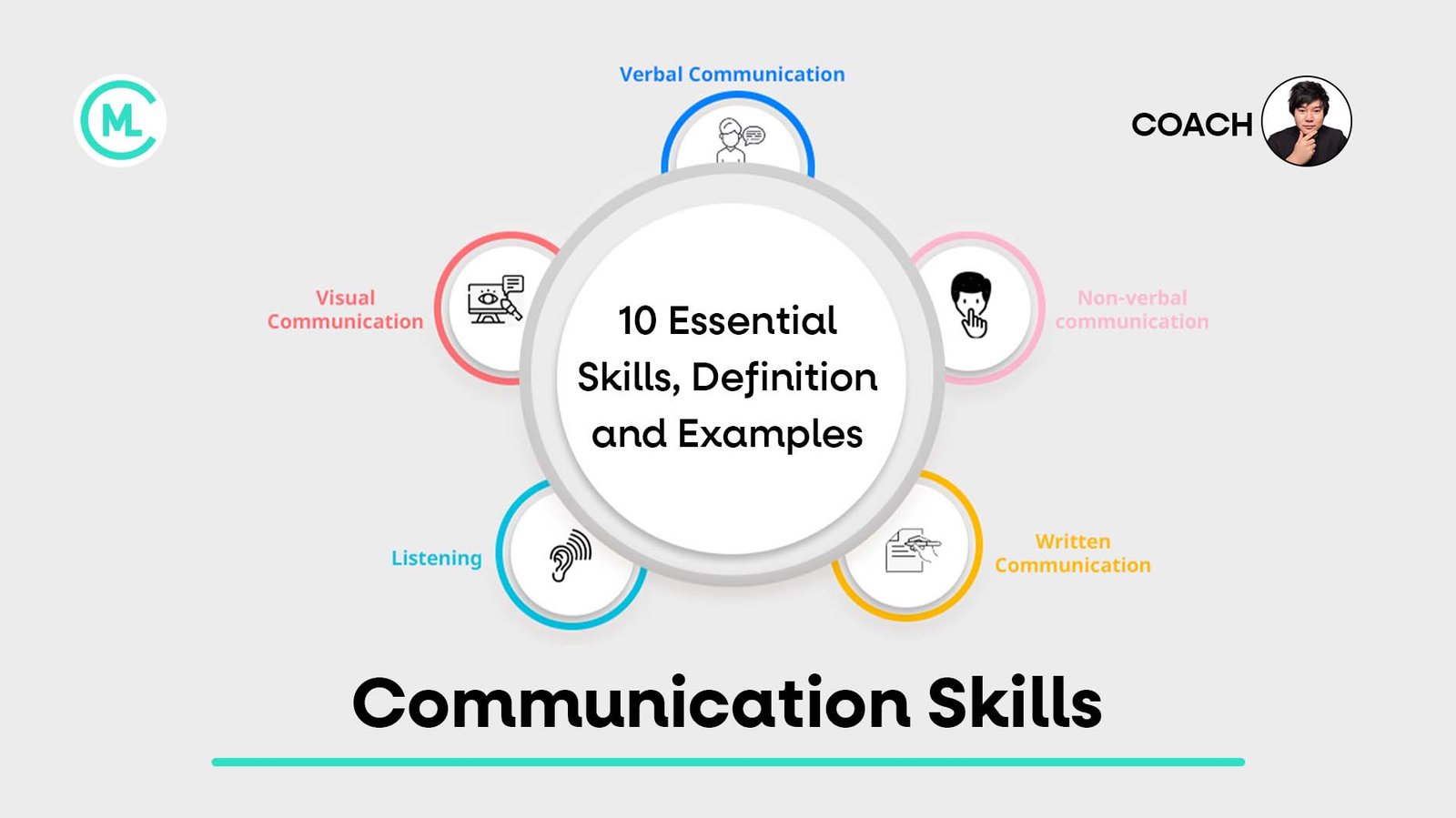
The 10 essential communication skills are active listening, clarity and conciseness, empathy, nonverbal awareness, confidence, emotional intelligence, open-ended questions, feedback, adaptability, and respect. Communication skills are the abilities people use to give and receive information clearly and effectively. Communication skills include verbal, nonverbal, written, visual, and listening skills. Employers rank communication skills among the most wanted skills, and strong communication skills build trust in friendships, romantic relationships, and families. Communication skills are learnable skills, and deliberate practice strengthens every skill on the list.
10 Essential Communication Skills
The 10 essential communication skills are active listening, clarity and conciseness, empathy, nonverbal awareness, confidence, emotional intelligence, open-ended questions, feedback, adaptability, and respect. The top communication skills combine sending skills, such as clarity and confidence, with receiving skills, such as active listening and empathy. The list of communication skills below works as a checklist for work, friendships, and relationships. The 10 essential communication skills are below, with communication skills examples for each skill.
1. Active Listening
Active listening is the skill of giving full attention to a speaker and confirming the message through paraphrasing and clarifying questions. Psychologists Carl Rogers and Richard Farson introduced the term “active listening” in 1957. Robert Bolton, in the 1979 book People Skills, described active listening as listening with the whole body: eye contact, an open posture, and quiet attention. Active listening involves 3 behaviors: full attention, paraphrasing, and the habit to ask clarifying questions. A manager who summarizes an employee’s concern before responding shows active listening at work. A partner who asks “What was the hardest part of your day?” and listens to the full answer shows active listening at home.
2. Clarity and Conciseness
Clarity and conciseness is the skill of stating 1 main idea in the fewest necessary words. Clear and concise communication saves time and prevents information overload. The ability to articulate a point in 1 or 2 sentences helps listeners remember the message. Clear communicators state the main point first and add only the necessary background. An employee who writes “The launch moves to Friday because the vendor delayed delivery” expresses ideas clearly in 1 sentence. A friend who says “I need a quiet weekend to recharge” states a need without confusion.
3. Empathy
Empathy is the skill of recognizing and sharing another person’s feelings during a conversation. Psychologists Paul Ekman and Daniel Goleman describe 3 types of empathy: cognitive empathy (understanding thoughts), emotional empathy (sharing feelings), and compassionate empathy (acting to help). Empathy in communication helps a speaker choose words that fit the listener’s emotional state. A team leader who notices stress in a colleague and adjusts a deadline shows empathy at work. A partner who says “That sounds exhausting” before offering advice shows empathy at home.
4. Nonverbal Awareness
Nonverbal awareness is the skill of reading and aligning body language, facial expressions, eye contact, and tone of voice with spoken words. Nonverbal communication skills also cover paraverbal messages, meaning the tone, pitch, and pace of the voice. Albert Mehrabian’s 1971 research found that listeners rely on tone of voice and facial expressions when a speaker’s words and feelings send inconsistent signals. Body language, facial expressions, and gestures confirm or contradict spoken words. A job candidate who maintains eye contact and an open posture signals interest. A date who leans forward and smiles signals warmth without a single word.
5. Confidence
Confidence is the skill of delivering a message with a steady voice, direct eye contact, and clear requests. Confident communication sounds sure without sounding arrogant, because confidence respects the other person’s view. Confidence in communication builds trust, because listeners believe messages that sound certain and consistent. Maintaining eye contact, speaking at a steady pace, and avoiding filler words all signal confidence. An employee who says “I recommend option B, and here is why” shows confidence in a meeting. A person who asks a crush for a coffee date in a clear, relaxed way shows confidence in dating.
6. Emotional Intelligence
Emotional intelligence is the skill of recognizing, understanding, and managing emotions in oneself and in others. Psychologists Peter Salovey and John Mayer introduced the concept of emotional intelligence in 1990. Daniel Goleman’s 1995 book Emotional Intelligence defines 5 components: self-awareness, self-regulation, motivation, empathy, and social skill. Empathy and emotional regulation keep conversations calm during stress and conflict. A manager who stays calm during a heated meeting uses emotional intelligence. A partner who notices rising anger and asks for a short break uses emotional intelligence at home.
7. Open-Ended Questions
Open-ended questions are questions that invite detailed answers instead of yes or no. Open-ended questions start with words such as “what,” “how,” and “why.” A 2017 study by Karen Huang and colleagues at Harvard found that conversation partners rated people who asked more follow-up questions as more likable. Asking and answering open-ended questions turns small talk into real conversation. A manager who asks “How can the team support the project?” gathers more ideas than a manager who asks “Is everything fine?” A person on a first date who asks “What’s something you’re excited about this month?” invites a personal story.
8. Feedback
Feedback is the skill of giving specific, constructive input and receiving criticism without defensiveness. Giving and receiving feedback keeps teams improving and relationships honest. Specific feedback, such as “The chart on slide 4 made the budget clear,” teaches more than vague praise, such as “Good job.” Receiving feedback well means listening fully, thanking the speaker, and asking 1 clarifying question before responding. A colleague who asks for feedback on a draft improves faster than a colleague who works alone. A couple who shares appreciation and gentle requests every week builds a habit of honest feedback.
9. Adaptability
Adaptability is the skill of adjusting words, tone, and channel to different people and situations. Adaptable communicators adapt to different audiences: a technical explanation for an engineer and a simple explanation for a client. Adaptability in communication also covers communication styles and cross-cultural communication, because norms for directness and eye contact differ between cultures. Language and tone that fit a friend’s chat do not fit a client email. An employee who explains a delay in detail to a manager and in 1 sentence to a customer shows adaptability. A friend who switches from jokes to quiet support when a friend shares bad news shows adaptability in friendship.
10. Respect
Respect is the skill of acknowledging other viewpoints without interruption or dismissal, even during disagreements. Respect in communication keeps a conversation safe, so both people share honest opinions. Respect shows in turn-taking, polite language, and attention to the other person’s time. Assertive communication combines honesty with respect, while aggressive communication drops respect. A team member who says “I see the point, and I have a different view” disagrees with respect. A partner who listens fully before responding during an argument shows respect at home.
What Are Communication Skills?
Communication skills are the abilities people use to give and receive information, including speaking, listening, writing, and reading nonverbal cues. The communication skills definition covers 2 sides: communication skills refer to both sending skills and receiving skills. Sending skills include verbal messages (the words), nonverbal messages (body language), and paraverbal messages (tone, pitch, and pace). Receiving skills include listening and the interpretation of nonverbal cues. Communication scholars Brian Spitzberg and William Cupach described communication competence in 1984 as communication that is both effective and appropriate. Effective communication skills help people share ideas clearly and effectively, connect with others, and solve problems together. Communication skills grow with practice, so people improve communication skills at any age.
What Are the Types of Communication Skills?
The 5 types of communication skills are verbal, nonverbal, written, visual, and listening skills. Verbal communication skills cover spoken words, such as presentations, phone calls, and conversations. Nonverbal communication skills cover body language, facial expressions, and eye contact. Written communication skills cover emails, reports, and text messages, where clarity and attention to detail matter most. Visual communication skills cover charts, slides, and images. Listening skills cover the receiving side of every exchange. Each type of communication skill supports the others: a presentation combines verbal skills, nonverbal skills, and visual slides, while a text message relies on written skills alone. Many career guides list 3 types of communication skills, verbal, nonverbal, and written, as the 3 main types, and add visual communication and listening as separate forms of communication.
Are Communication Skills Soft Skills?
Yes, communication skills are soft skills, because communication skills are transferable, people-focused abilities that apply in every job and relationship. Soft skills cover how people work and interact, while hard skills cover technical knowledge, such as coding or accounting. Communication skills transfer across industries, so communication skills keep career options open. Employers value soft skills because technical knowledge depends on communication to reach colleagues and customers.
What Is the Difference Between Communication Skills and Social Skills?
Communication skills cover the exchange of messages, while social skills cover the wider behaviors people use to build relationships and follow social norms. Communication skills include verbal communication, nonverbal communication, written communication, and listening. Social skills include communication skills plus reading social cues, cooperating in groups, and following unwritten rules, such as turn-taking at a dinner table. The communication skills vs social skills difference shows in groups: a person with strong communication skills explains ideas clearly, while a person with strong social skills also knows when to speak, when to listen, and how to join a group conversation.
What Are Examples of Communication Skills?
Examples of communication skills include summarizing a meeting, asking a follow-up question on a first date, and giving specific praise to a colleague. The table below lists 1 example at work and 1 example in relationships for each of the 10 essential communication skills.
| Skill | Example at work | Example in relationships |
|---|---|---|
| Active listening | Summarizing a client’s request before answering | Repeating a partner’s worry to confirm understanding |
| Clarity and conciseness | Writing an email with 1 clear request | Stating a need in 1 sentence |
| Empathy | Adjusting a deadline for a stressed colleague | Saying “That sounds hard” before offering advice |
| Nonverbal awareness | Keeping eye contact in an interview | Leaning in and smiling on a date |
| Confidence | Presenting a recommendation with a steady voice | Asking someone out in a clear, relaxed way |
| Emotional intelligence | Staying calm in a tense meeting | Asking for a short break during an argument |
| Open-ended questions | Asking a team “How can the project improve?” | Asking “What made you smile today?” |
| Feedback | Giving specific praise on a report | Sharing weekly appreciation with a partner |
| Adaptability | Explaining a delay differently to a manager and a customer | Switching from jokes to support when a friend shares bad news |
| Respect | Disagreeing politely in a meeting | Listening fully before responding in an argument |
The examples show that the same 10 communication skills work at the office, at home, and on a first date.
Why Are Communication Skills Important?
Communication skills are important because communication skills build trust, prevent misunderstandings, and support success at work and in relationships. Communication skills are essential for teamwork, leadership, customer service, and every close relationship. Strong communication skills reduce conflict, because clear messages and active listening prevent most misunderstandings. Communication skills are crucial for career growth, because employers promote people who explain ideas clearly and work well with others. Good communication skills also protect wellbeing, because people who express needs and feelings receive more support.
What Communication Skills Do Employers Look For?
Employers look for verbal, written, listening, and interpersonal communication skills, because every role depends on a clear exchange of information. The National Association of Colleges and Employers (NACE) lists communication skills among the top attributes employers seek on resumes in the NACE annual Job Outlook survey. LinkedIn’s 2024 list of the most in-demand skills ranked communication as the top skill among employers. The communication skills employers look for include clear writing, confident presenting, active listening, and calm conflict resolution, because employees who communicate effectively save time for every team. Employers also look for adaptability, because modern teams communicate across email, chat, video calls, and in-person meetings.
What Are Communication Skills in the Workplace?
Communication skills in the workplace are the abilities employees use to share information, collaborate with team members, and serve customers. Workplace communication skills include presenting project findings, mediating a conflict between team members, writing clear emails, and running productive meetings. Clear communication in the workplace reduces mistakes, speeds up decisions, and builds trust between employees and managers. Public speaking, persuasion, negotiation, and storytelling help employees influence decisions and lead projects. Digital communication skills, such as clear chat messages and professional video calls, matter more as teams work remotely. Customer-facing roles, such as sales, nursing, and support, depend on empathy and active listening, because customers and patients judge an organization by every conversation.
How Do You Show Communication Skills on a Resume?
Communication skills appear on a resume through a skills section, achievement statements with results, a well-written cover letter, and clear answers in the interview. The 3 main places to show communication skills are below.
- Resume: A resume lists specific communication skills, such as active listening, technical writing, and conflict resolution, and adds achievement statements, such as “Resolved 40 customer complaints per week with a 95% satisfaction rate.”
- Cover letter: A clear, concise, error-free cover letter demonstrates written communication skills directly.
- Interview: The STAR method (situation, task, action, result) structures interview answers about past communication challenges.
A resume that shows results proves communication skills better than a resume that only lists skill names.
What Communication Skills Matter Most in Relationships?
Active listening, empathy, respect, and honest feedback matter most in relationships, because those communication skills build trust and emotional safety. Communication skills in relationships help partners, friends, and family members feel heard and understood. John Gottman’s research at the University of Washington found that stable couples maintain about 5 positive interactions for every 1 negative interaction during conflict. “I” statements, such as “I feel lonely when we skip our evening walks,” share feelings without blame. Open-ended questions and confident, relaxed body language help on first dates, where curiosity creates connection. Respect and emotional intelligence keep arguments calm, so partners solve problems instead of attacking each other. Friendships depend on the same communication skills: regular contact, active listening, and honest feedback keep friends close across distance and busy schedules. Families benefit when parents model active listening and calm disagreement, because children copy the communication patterns at home.
How Can You Improve Communication Skills?
Communication skills improve through deliberate practice, honest feedback, observation of skilled communicators, and regular reflection. The answer to how to improve communication skills is practice: the best ways to improve communication skills are small daily habits rather than rare big efforts. The 6 main ways to improve communication skills are below.
- Deliberate practice: Daily practice of 1 skill, such as paraphrasing or open-ended questions, turns the skill into a habit.
- Honest feedback: Feedback from a manager, mentor, or trusted friend reveals blind spots in tone and clarity.
- Observation: Observation of skilled communicators, such as a respected leader or teacher, shows strong communication in action.
- Recorded practice: A recording of a presentation or practice conversation reveals filler words, pace, and body language.
- Volunteering and new situations: Volunteering, clubs, and networking events offer low-pressure settings for practice.
- Coaching and training: Communication coaching and workshops provide structure, practice, and personal feedback.
Small, consistent habits improve communication skills faster than occasional big efforts.
How Do You Know If Your Communication Skills Are Strong?
Strong communication skills show in observable behavior, such as fewer misunderstandings, calm disagreements, and people who feel heard. The table below compares 8 signs of strong communication skills with 8 signs of weak communication skills.
| Sign of strong communication skills | Sign of weak communication skills |
|---|---|
| People rarely misunderstand instructions | People often ask for repeated explanations |
| Disagreements stay calm | Disagreements turn into arguments |
| Other people feel heard | Other people feel interrupted |
| Messages are short and specific | Messages are long and vague |
| Body language matches the words | Body language contradicts the words |
| Feedback leads to improvement | Feedback leads to defensiveness |
| Tone adapts to each audience | 1 tone fits every audience |
| Conversations go beyond small talk | Conversations stay on the surface |
A short self-check against the table shows which communication skills need the most practice.
What Is the Difference Between Communication Skills and Interpersonal Skills?
Communication skills cover the sending and receiving of messages, while interpersonal skills also cover teamwork, conflict resolution, and leadership. Communication interpersonal skills overlap heavily, because every interpersonal skill depends on clear messages and attentive listening. Interpersonal skills form the wider set, and communication skills form the core of that set. The communication skills vs interpersonal skills difference matters for growth: a person with strong communication skills explains and listens well, while a person with strong interpersonal skills also builds teams, resolves conflicts, and leads others. Communication skills come first, because teamwork, leadership, and conflict resolution all depend on clear messages and attentive listening. More communication skills examples show each skill in action at work and in relationships. Practical ways to improve communication skills turn each skill into a daily habit. A guide to communication confidence breaks the confidence skill into 35 practical ways to speak with a steady voice and clear words. One-on-one communication coaching adds expert feedback and accountability to the same practice.
How Do Communication Skills Make Communication Effective?
Communication skills make communication effective by applying the 7 Cs of communication in every message. Effective communication means that the receiver understands the message the way the sender intended. Clarity and conciseness cover the clear and concise C’s. Empathy and respect cover the courteous C. Feedback confirms that the message arrived complete and correct. Confidence supports the concrete C, because confident communicators state specific facts instead of vague hopes. The 7 Cs describe what an effective message looks like, and the 10 communication skills describe the habits that produce effective messages.
Which Types of Communication Use Each Communication Skill?
Every type of communication uses specific communication skills: verbal communication uses clarity, nonverbal communication uses nonverbal awareness, and written communication uses conciseness. The 4 main types of communication are verbal, nonverbal, written, and visual communication, with listening as the receiving side. Visual communication uses adaptability, because each audience needs a different chart or image. Listening uses active listening and empathy. Written communication also depends on attention to detail, because a single wrong date or name reduces trust in the whole message. Nonverbal awareness matters most in face-to-face conversations and video calls, where facial expressions and tone carry emotion.
How Do Communication Skills Overcome Barriers?
Communication skills overcome barriers by matching each barrier with a skill, such as empathy for emotional barriers and clarity for language barriers. The barriers to communication include physical, emotional, language, cultural, and technological barriers. Adaptability reduces cultural barriers, and active listening reduces perceptual barriers. Emotional intelligence keeps strong emotions from blocking a conversation. Feedback skills reveal hidden barriers, because a clarifying question exposes a misunderstanding before the misunderstanding grows.
How Do Communication Skills Support the Communication Process?
Communication skills support the 5 steps of the communication process and strengthen the elements of communication, from encoding to feedback. Clarity strengthens encoding, nonverbal awareness strengthens transmission, active listening strengthens decoding, and feedback skills close the loop. Empathy widens the overlap between the fields of experience of 2 people. Respect lowers psychological noise, such as defensiveness, so the receiver stays open to the message.
Why Do Communication Skills Matter at Every Level of Communication?
Communication skills matter at every level of communication, because self-talk, conversations, meetings, and speeches all depend on clear messages and attentive listening. The 5 levels of communication are intrapersonal, interpersonal, group, public, and mass communication. The importance of communication shows at every level, and communication skills turn that importance into results. Interpersonal communication depends most on active listening, empathy, and respect. The 10 essential communication skills, the definition of communication skills, and the communication skills examples above apply to every part of communication. More guides on communication are available in the Knowledge Hub.