
Barriers to Communication: Types, Examples and How to Overcome Them
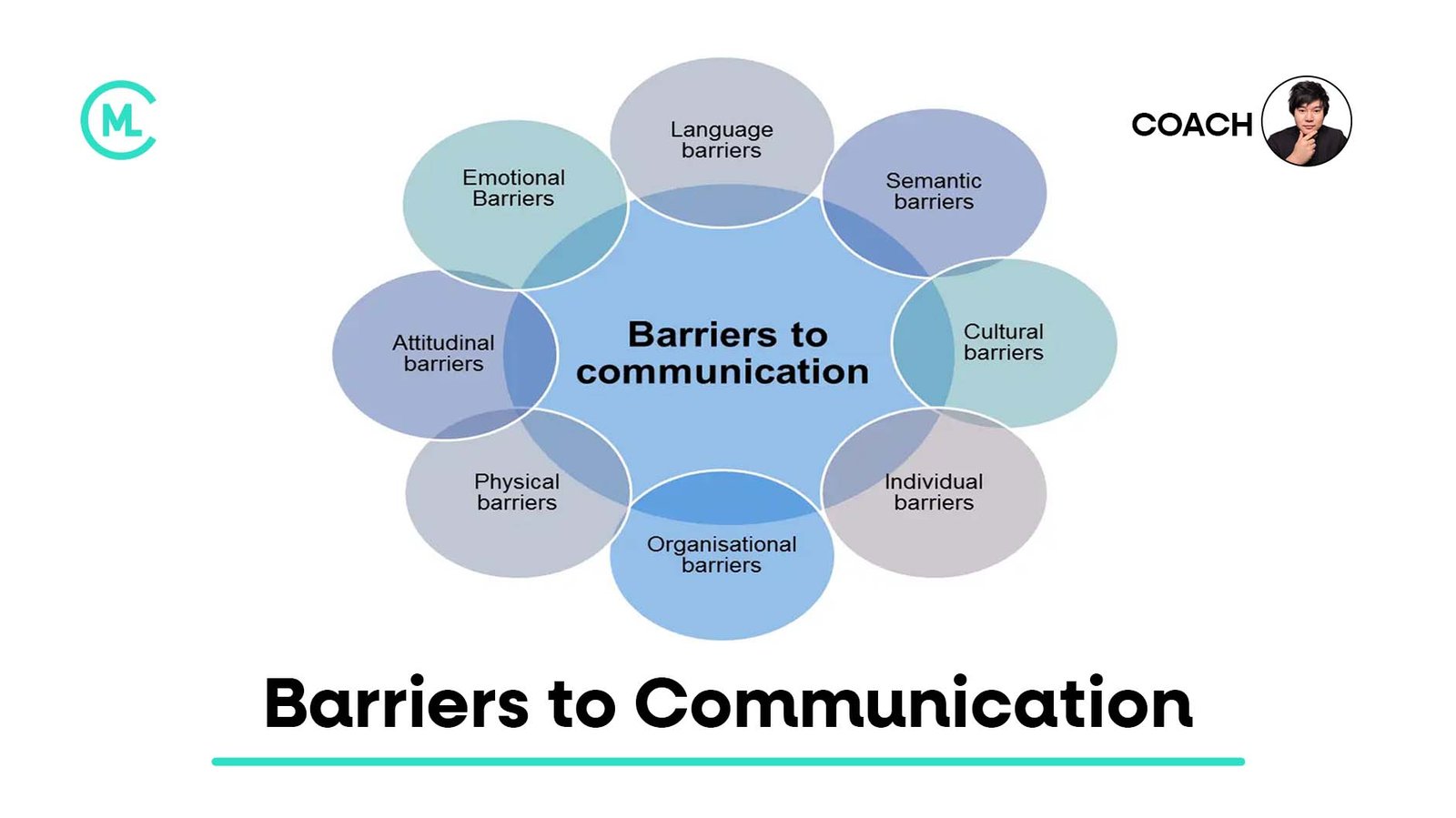
Barriers to communication are obstacles that block, distort, or delay a message between a sender and a receiver, and the 9 main types are physical, physiological, psychological, emotional, perceptual, language, cultural, organizational, and technological barriers. Communication barriers come from inside a person, from the environment, or from the systems around people. Common examples include background noise, jargon, strong emotions, and missing tone in text messages. Barriers appear in every setting, including listening, the workplace, and romantic relationships. Active listening, plain language, the right channel, and regular feedback overcome most barriers to communication.
What Are Barriers to Communication?
Barriers to communication are obstacles that stop a receiver from understanding a message the way the sender intended. Communication barriers affect every part of an exchange, from the words a sender chooses to the attention a receiver gives. Barriers to effective communication turn a clear idea into a confusing or hurtful message. Effective communication barriers, such as jargon or a noisy room, often go unnoticed until a misunderstanding appears.
Barriers to communication create 4 main problems: misunderstandings, conflict, mistakes, and lost trust. A vague instruction at work produces a missed deadline. A sarcastic text message to a partner produces an argument. Small barriers keep repeating, leading to misunderstandings that grow over time.
Why Do Communication Barriers Happen?
Communication barriers happen when something interferes with the sender, the message, the channel, or the receiver at any step of the communication process. Claude Shannon and Warren Weaver described interference as noise in 1948 and 1949. A barrier appears when encoding and decoding do not match: the sender means 1 thing, and the receiver understands another thing. Distance, emotion, culture, and technology each create a different kind of gap between sender and receiver.
What Is the Difference Between Internal and External Communication Barriers?
Internal communication barriers come from inside a person, such as emotions, biases, and stress, while external communication barriers come from the environment, such as noise, distance, and technology problems. A third group, systemic barriers, comes from structures and power, such as hierarchy and cultural norms. Internal and external barriers to communication often appear together, such as stress and a noisy room during the same conversation. The 3 groups of communication barriers are below.
- Internal barriers: Internal barriers include emotions, biases, low confidence, and cognitive overload.
- External barriers: External barriers include background noise, physical distance, and technology problems.
- Systemic barriers: Systemic barriers include power dynamics, rigid hierarchy, and cultural expectations.
What Are the Types of Barriers to Communication?
The 9 main types of barriers to communication are physical, physiological, psychological, emotional, perceptual, language, cultural, organizational, and technological barriers. Some training companies use a shorter model of 7 barriers to communication: physical, perceptual, emotional, cultural, language, gender, and interpersonal barriers. The sections below explain the 9 types of barriers to communication, and each type connects to a specific fix.
What Are Physical Barriers to Communication?
Physical barriers to communication are environmental obstacles, such as noise, distance, closed office doors, and poor equipment, that block or distort a message. Physical communication barriers include a loud open-plan office, a weak phone signal, and a team spread across different time zones. Remote work adds a new physical barrier to communication, because video calls make body language and facial expressions harder to read. A quiet meeting space and a video call instead of an email reduce physical barriers for complex topics.
What Are Physiological Barriers to Communication?
Physiological barriers to communication are physical conditions of the sender or receiver, such as hearing loss, illness, fatigue, or pain, that limit sending or receiving a message. A tired manager at the end of a long day absorbs less information than a rested manager in the morning. A person with hearing loss misses words in a noisy restaurant. Captions, written summaries, and well-timed conversations reduce physiological barriers.
What Are Psychological Barriers to Communication?
Psychological barriers to communication are mental states, such as low confidence, anxiety, stress, and fixed beliefs, that distort how a person speaks or listens. Lack of confidence is 1 of the most common psychological barriers: shyness, difficulty being assertive, or low self-worth stops a person from sharing ideas. Anxiety narrows attention, so an anxious listener remembers less of a conversation. A closed mind rejects new information before the speaker finishes. Practice in low-pressure conversations builds confidence and reduces psychological barriers.
What Are Emotional Barriers to Communication?
Emotional barriers to communication are strong feelings, such as anger, fear, or hurt, that block clear speaking and listening. When emotions run high, the brain focuses on threat and loses the ability to process detail. An angry partner hears criticism in a neutral question. A fearful employee stays silent about a mistake. Emotional walls, built from past hurt, keep people from sharing thoughts and feelings in close relationships. A pause before responding gives strong emotions time to settle and reduces emotional barriers.
What Are Perceptual Barriers to Communication?
Perceptual barriers to communication are differences in how people see and interpret the same situation, based on past experiences, assumptions, and biases. Selective perception filters a message through existing beliefs, so each person hears the parts that confirm personal expectations. Stereotypes and cognitive biases shape how a listener judges a speaker before the speaker finishes. Two colleagues who watch the same meeting often leave with different conclusions. Clarifying questions replace assumptions with facts and reduce perceptual barriers.
What Are Language Barriers to Communication?
Language barriers to communication occur when people speak different languages or use words, jargon, or technical terms that the other person does not understand. Communication researchers also call language barriers semantic barriers to communication. Language differences between native and non-native speakers add accents, idioms, and slang that confuse listeners. A 2020 study by Zachariah Brown, Eric Anicich, and Adam Galinsky found that people who feel lower in status use more jargon, often to appear competent. Jargon excludes listeners who do not know the technical terms. Plain language and short definitions of necessary terms remove most language barriers.
What Are Cultural Barriers to Communication?
Cultural barriers to communication arise when people from different cultures follow different norms for directness, eye contact, personal space, and hierarchy. Edward T. Hall described high-context and low-context cultures in the 1976 book Beyond Culture. High-context cultures rely on shared understanding and nonverbal cues, while low-context cultures rely on direct, explicit words. A direct request that sounds efficient in 1 culture sounds rude in another culture. Awareness of cultural differences and open questions about expectations reduce cultural barriers.
What Are Organizational Barriers to Communication?
Organizational barriers to communication are structural problems inside a workplace, such as rigid hierarchy, silos, unclear roles, and information overload. Rigid hierarchy slows messages as the messages pass through several levels of managers. Silos keep teams working with separate priorities and separate language. Amy Edmondson’s research on psychological safety, published in 1999, showed that teams learn more when members feel safe to speak up. Google’s Project Aristotle, a 2015 study of more than 180 teams, ranked psychological safety as the strongest factor in team effectiveness. Clear roles and open channels reduce organizational barriers.
What Are Technological Barriers to Communication?
Technological barriers to communication are problems caused by digital tools, such as poor connections, missing tone in text, and overreliance on chat and email. Text-based messages remove tone of voice and body language. A 2005 study by Justin Kruger and Nicholas Epley found that email senders overestimated how accurately receivers identified the intended tone of an email. Misuse of communication channels, such as delivering bad news by chat, adds another barrier. Richard Daft and Robert Lengel’s media richness theory recommends rich channels, such as face-to-face conversation, for complex or emotional messages.
What Are Examples of Barriers to Communication?
Examples of barriers to communication include a noisy café, a headache during a meeting, jargon in an email, a heated argument, and a video call with poor audio. The table below lists 1 example for each of the 9 types of barriers to communication.
| Type | Example | How the barrier affects the message |
|---|---|---|
| Physical | A team discussion in a loud open-plan office | Background noise hides key words |
| Physiological | A client meeting during a migraine | Pain reduces attention and memory |
| Psychological | A new employee too nervous to ask a question | Low confidence keeps a problem hidden |
| Emotional | A couple arguing after a stressful day | Anger turns neutral words into criticism |
| Perceptual | A manager assuming a quiet employee is uninterested | An assumption replaces the real reason |
| Language | A doctor using medical terms with a patient | Jargon blocks understanding |
| Cultural | A direct request to a colleague from a high-context culture | Directness sounds rude instead of efficient |
| Organizational | A message passing through 4 levels of management | The message arrives late and changed |
| Technological | A short text message with no tone | The receiver reads annoyance into a neutral message |
The examples of barriers to communication show that every barrier changes the meaning of a message before the receiver responds.
What Are the Most Common Barriers to Communication?
The most common barriers to communication are poor listening, information overload, lack of trust, assumptions, differences in communication styles, and lack of time. The 6 most common communication barriers are below.
- Poor listening: Poor listening turns a conversation into 2 separate monologues, because each person waits to speak rather than listening.
- Information overload: Information overload happens when a message contains too much information, so the receiver misses the main point.
- Lack of trust: Lack of trust makes receivers question the motives behind a message, even when the message is accurate.
- Assumptions: Assumptions fill gaps in a message with guesses, and the guesses often differ from the sender’s intention.
- Differences in communication styles: Differences in communication styles create friction, such as a detailed communicator working with a big-picture communicator.
- Lack of time: Lack of time shortens messages and removes the context that receivers need.
Common barriers often appear together, so a rushed message with too much information and no context fails in several ways at once.
What Are the Barriers to Effective Listening?
The barriers to effective listening are distractions that stop a listener from receiving the speaker’s message, such as planning a reply, interrupting, and judging the speaker. The University of Waterloo’s Centre for Teaching Excellence lists personal agendas, information overload, and criticism of the speaker among the main listening barriers. The 5 main barriers to effective listening are below.
- Focusing on a personal agenda: A listener who plans the next reply stops paying attention to the speaker’s message.
- Interrupting: Interruptions break the speaker’s train of thought and signal a lack of respect.
- Criticizing the speaker: Judgment about the speaker’s appearance or style distracts from the content of the message.
- Information overload: Too much stimulation or detail makes full attention difficult.
- Pseudo-listening: Pseudo-listening looks attentive, with nods and eye contact, but the listener’s mind stays elsewhere.
Questions to clarify, such as “What do you mean by that?”, bring a listener back to the speaker’s message and remove most listening barriers.
What Are the Barriers to Communication in the Workplace?
The barriers to communication in the workplace are organizational silos, lack of psychological safety, poor communication skills, overreliance on digital tools, rigid hierarchy, unclear roles, and language and cultural differences. The 7 main barriers to communication in the workplace are below.
- Organizational silos: Silos keep departments disconnected, so information depends on personal relationships instead of shared processes.
- Lack of psychological safety: Lack of psychological safety keeps employees silent about mistakes, ideas, and concerns.
- Poor communication skills: Poor communication skills among employees and leaders lead to vague instructions and unclear feedback.
- Overreliance on digital tools: Overreliance on chat and email replaces conversations that need tone and immediate feedback.
- Rigid hierarchy: Rigid hierarchy slows messages and discourages honest feedback from junior employees.
- Unclear roles: Unclear roles and responsibilities create duplicated work and missed tasks.
- Language and cultural differences: Language and cultural differences create misunderstandings in global and diverse teams.
Open communication, clear roles, and regular feedback reduce workplace communication barriers across teams.
What Are Communication Barriers in Relationships?
Communication barriers in relationships are patterns that block emotional connection between partners, such as criticism, defensiveness, assumptions, and emotional shutdown. The communication barriers couples face often start small, with a sarcastic comment or an assumption about a partner’s feelings. Mind-reading, meaning the belief that a partner knows unspoken needs, creates disappointment on both sides. Physical distance and technology add barriers in long-distance relationships, because text messages lose tone and warmth. Barriers in relationships grow over time when partners avoid difficult conversations. Honest conversations about thoughts and feelings, needs, and expectations keep emotional connection strong.
What Are Gottman's Four Horsemen?
Gottman’s Four Horsemen are criticism, contempt, defensiveness, and stonewalling, the 4 communication patterns that John Gottman’s research links to relationship breakdown. Gottman identified contempt as the strongest predictor of divorce among the 4 patterns. The table below lists each of the Four Horsemen with the pattern and the antidote.
| Horseman | What the pattern looks like | Antidote |
|---|---|---|
| Criticism | An attack on a partner’s character instead of a specific behavior | Gentle start-up with an “I” statement |
| Contempt | Sarcasm, eye-rolling, mockery, and a sense of superiority | A culture of appreciation and respect |
| Defensiveness | Excuses and counterattacks instead of listening | Taking responsibility for part of the problem |
| Stonewalling | Emotional shutdown and withdrawal from the conversation | A 20-minute break and physiological self-soothing |
Each of the Four Horsemen has a specific antidote, and the antidotes turn a destructive argument into a repairable disagreement.
What Is the Pursuer-Withdrawer Pattern?
The pursuer-withdrawer pattern is a negative cycle in which 1 partner pushes for connection while the other partner pulls away, and each reaction increases the other reaction. The pursuing partner asks more questions, raises the voice, or follows the partner from room to room. The withdrawing partner goes quiet, changes the subject, or leaves. Emotionally focused therapy, developed by Sue Johnson, describes the pattern as a cycle driven by fear of disconnection on both sides. Couples break the pursuer-withdrawer pattern by naming the cycle together as the shared problem, rather than blaming each other.
How Can You Overcome Barriers to Communication?
Barriers to communication shrink through active listening, plain language, the right channel, regular feedback, and emotional awareness. The 8 main strategies to overcome communication barriers are below.
- Active listening: Active listening gives full attention to the speaker and confirms the message before a response.
- Plain language: Plain language replaces jargon and technical terms with words the receiver knows.
- The right channel: Face-to-face conversation or video carries complex and emotional messages better than text.
- Regular feedback: Regular feedback confirms that the receiver understood the message as intended.
- Emotional regulation: A short pause before responding lets strong emotions settle.
- Cultural awareness: Awareness of cultural norms prevents directness, silence, or eye contact from sending the wrong signal.
- Clarifying questions: Clarifying questions replace assumptions with facts.
- Psychological safety: Psychological safety encourages people to speak up about problems and ideas.
Each strategy targets a specific barrier, so a combination of strategies removes most barriers to communication. The question of how to overcome barriers to communication has no single answer, because each barrier needs a matching fix. People who communicate effectively combine several strategies in the same conversation.
How Does Active Listening Remove Communication Barriers?
Active listening removes communication barriers by confirming the speaker’s message through full attention, paraphrasing, and clarifying questions. Psychologists Carl Rogers and Richard Farson introduced the term “active listening” in 1957. An active listening strategy includes 4 behaviors: eye contact, paraphrasing, clarifying questions, and withholding judgment. Paraphrasing, such as “What I hear you saying is…”, shows the speaker that the message arrived intact. Active listening reduces emotional, perceptual, and psychological barriers at the same time.
How Do “I” Statements Reduce Defensiveness?
“I” statements reduce defensiveness by describing the speaker’s feelings and needs instead of blaming the listener. An “I” statement follows the pattern “I feel [emotion] about [situation], and I need [request].” The sentence “I feel worried when plans change at the last minute, and I need a text if the evening changes” invites cooperation. The sentence “You never tell me anything” invites a counterattack. Gottman calls the softer opening a gentle start-up, and a gentle start-up is the antidote to criticism.
Why Is It Important to Overcome Communication Barriers?
Overcoming communication barriers matters because barriers cause misunderstandings, conflict, mistakes, and lost trust in relationships and at work. Barriers hinder effective communication at every level, from a conversation between partners to a company-wide announcement. The importance of overcoming communication barriers shows in daily life, because every avoided misunderstanding saves time, stress, and trust. The 4 main benefits of overcoming communication barriers are below.
- Fewer misunderstandings: Clear messages and feedback reduce confusion and repeated explanations.
- Stronger relationships: Open communication builds trust and emotional safety between partners, friends, and family members.
- Better teamwork: Teams without silos and fear share information faster and make better decisions.
- Greater confidence: People who communicate without barriers share ideas and needs more easily.
How Do Barriers Affect the Communication Process?
Barriers affect the communication process by breaking 1 of the 5 steps: idea formation, encoding, transmission, decoding, or feedback. An unclear purpose breaks idea formation. Jargon breaks encoding. A poor connection breaks transmission. An assumption breaks decoding. Silence breaks feedback. Each barrier to communication fits at least 1 step, so the 5 steps help people find the exact point where a message failed. Barriers in the communication process rarely stay at 1 step: an emotional barrier during decoding often leads to a harsh reply at the feedback step, which starts a new cycle of misunderstanding. The feedback step also repairs barriers, because a clarifying question sends the message back to the sender for correction.
How Does Noise Relate to Communication Barriers?
Noise is 1 of the 11 elements of communication, and noise is the technical name for any barrier that distorts a message. The 4 types of noise match the main barrier types. Physical noise matches physical barriers, physiological noise matches physiological barriers, psychological noise matches psychological and emotional barriers, and semantic noise matches language barriers. Noise in communication also connects to context and field of experience, 2 other elements of communication. A message that fits the sender’s field of experience but falls outside the receiver’s field of experience meets a perceptual barrier, even in a quiet room with a perfect connection.
Which Types of Communication Face the Most Barriers?
Written and digital communication face the most barriers, because written communication removes tone of voice and body language. The 4 main types of communication are verbal, nonverbal, written, and visual communication. Verbal communication gives immediate feedback, so the listener corrects misunderstandings quickly. Nonverbal communication adds meaning, but cultural differences change how people read gestures and eye contact. Visual communication crosses many language barriers, because images, charts, and symbols carry meaning without words. The choice of communication type is therefore 1 of the simplest ways to reduce barriers: sensitive topics belong in a conversation, while detailed instructions belong in writing.
How Do Barriers Change Across the Levels of Communication?
Barriers grow as the level of communication grows, because more participants bring more noise, more cultures, and slower feedback. The 5 levels of communication are intrapersonal, interpersonal, group, public, and mass communication. Intrapersonal communication faces psychological barriers, such as negative self-talk. Mass communication faces cultural and language barriers, because a large audience includes people from many backgrounds. Group communication adds barriers such as groupthink and unequal participation, where a few members speak and the rest stay silent.
Which Interpersonal Skills Overcome Communication Barriers?
Active listening, empathy, clarity, and emotional intelligence are the interpersonal skills that overcome most communication barriers. Empathy reduces emotional and cultural barriers, because empathy helps a person see the situation from the other side. Clarity reduces language barriers. Emotional intelligence reduces emotional barriers by keeping reactions calm during difficult conversations. Practical ways to ease nervousness in conversation reduce psychological barriers before a talk begins. Adaptability reduces perceptual and cultural barriers, because an adaptable communicator adjusts words, tone, and pace to each listener. The same skills form the core of effective communication.
How Do Barriers Affect Interpersonal Communication?
Barriers affect interpersonal communication most deeply, because personal relationships depend on trust, tone, and emotional safety. A single sarcastic comment between partners damages trust more than a confusing email between strangers. Barriers in close relationships build up over months and years when partners avoid difficult conversations. The types, examples, and strategies to overcome barriers to communication apply to every part of communication, from self-talk to a public speech. More guides on communication are available in the Knowledge Hub.