
Interpersonal Communication: Definition, Skills, Types and Examples
By Michael Lee, communication and relationship coach · Last updated

Interpersonal communication is the exchange of information, ideas, and feelings between 2 or more people through verbal and nonverbal messages. Interpersonal communication depends on 8 core skills, including active listening, empathy, and clarity. Interpersonal communication takes 4 main types: verbal, nonverbal, written, and listening. Interpersonal communication appears in 4 main contexts: friendships, romantic relationships, family relationships, and workplace relationships. Everyday examples of interpersonal communication include a conversation between friends, a first date, a family dinner, and a performance review. Interpersonal communication builds trust, resolves conflict, and supports wellbeing across personal and professional life.
On this page
- What Is Interpersonal Communication?
- What Are Interpersonal Communication Skills?
- What Are the Types of Interpersonal Communication?
- What Are Examples of Interpersonal Communication?
- Why Is Interpersonal Communication Important?
- What Are the Barriers to Interpersonal Communication?
- What Are the Theories of Interpersonal Communication?
- What Is the Difference Between Interpersonal and Intrapersonal Communication?
What Is Interpersonal Communication?
Interpersonal communication is the exchange of information, ideas, and feelings between 2 or more specific people who influence each other through the exchange. The most common form of interpersonal communication is dyadic communication, meaning communication between 2 people. Interpersonal communication happens face to face or through a medium, such as a phone call, a text message, or a video call.
Interpersonal communication differs from impersonal communication. Impersonal communication treats the other person as a role, such as a scripted exchange between a cashier and a customer. Interpersonal communication treats the other person as a unique individual with personal thoughts, feelings, and history. The relationship between the 2 people shapes every message in interpersonal communication.
Interpersonal communication has 3 core characteristics. Interpersonal communication is interdependent, because each person’s message affects the other person’s response. Interpersonal communication is relational, because every exchange carries information and signals about the relationship. Interpersonal communication is transactional, because both people send and receive messages at the same time during a face-to-face conversation.
Interpersonal communication is 1 of the 5 levels of communication, alongside intrapersonal, group, public, and mass communication. Interpersonal communication builds, maintains, and repairs relationships between partners, friends, family members, and colleagues.
What Are the Principles of Interpersonal Communication?
The 4 principles of interpersonal communication are that interpersonal communication is inevitable, irreversible, complicated, and contextual. The 4 principles of interpersonal communication are below.
- Inevitable: Interpersonal communication happens even without words. Paul Watzlawick, Janet Beavin, and Don Jackson stated in 1967 that “one cannot not communicate,” because silence, posture, and facial expressions also send messages.
- Irreversible: A speaker cannot take back a spoken message. An apology repairs the effect of a harsh comment but does not erase the comment.
- Complicated: Every exchange involves perceptions, emotions, and past experiences. The same words carry different meanings for different people.
- Contextual: The relationship, setting, timing, and culture shape the meaning of every message. A joke between close friends sounds different in a formal meeting.
What Are Interpersonal Communication Skills?
Interpersonal communication skills are the abilities that help people send, receive, and interpret messages accurately in personal interactions. Brian Spitzberg and William Cupach described interpersonal communication competence in 1984 as communication that is both effective and appropriate. Effective communication achieves the goal of the exchange, and appropriate communication fits the relationship and the situation.
The core interpersonal communication skills are active listening, empathy, clarity, nonverbal awareness, feedback, conflict management, assertiveness, and emotional intelligence. Interpersonal communication skills belong to the group of soft skills, and practice with feedback develops interpersonal communication skills at any age. The full guide to interpersonal communication skills lists 20 skills with examples and explains how each skill works at work, in nursing, and in relationships.
What Are the Types of Interpersonal Communication?
The 4 types of interpersonal communication are verbal, nonverbal, written, and listening. Most conversations combine several types of interpersonal communication at once. A video call, for example, combines spoken words, facial expressions, chat messages, and active listening. The full guide to the types of interpersonal communication explains 12 types, from tone of voice and digital communication to one-on-one and small group communication, with an everyday example of each type.
What Are the Contexts of Interpersonal Communication?
The 4 main contexts of interpersonal communication are friendships, romantic relationships, family relationships, and workplace relationships. The 4 main contexts of interpersonal communication are below.
- Friendships: Interpersonal communication in friendships builds closeness through shared experiences, humor, and mutual support. Regular contact keeps friendships strong across distance and life changes.
- Romantic relationships: Interpersonal communication in romantic relationships builds trust and intimacy through self-disclosure and emotional support. Honest conversations about needs and expectations prevent long-term resentment.
- Family relationships: Interpersonal communication in families shapes identity, values, and emotional security from childhood onward. Parents model communication patterns that children repeat in adult relationships.
- Workplace relationships: Interpersonal communication at work supports teamwork, feedback, and collaboration between colleagues and managers. Respectful disagreement at work leads to better decisions than silent agreement.
What Are Examples of Interpersonal Communication?
Examples of interpersonal communication include a conversation between friends, a first date, a family dinner, and a performance review at work. The table below lists 8 examples of interpersonal communication by context and main type.
| Context | Example | Main types used |
|---|---|---|
| Friendship | 2 friends catching up over coffee | Verbal, nonverbal, listening |
| Romantic | A couple on a first date | Verbal, nonverbal, listening |
| Family | A parent and child talking at dinner | Verbal, nonverbal |
| Workplace | A manager giving feedback in a one-on-one meeting | Verbal, nonverbal, listening |
| Digital | 2 colleagues planning a project through chat messages | Written |
| Customer service | A support agent resolving a complaint by phone | Verbal, listening |
| Healthcare | A doctor explaining a diagnosis to a patient | Verbal, nonverbal, listening |
| Networking | 2 professionals introducing themselves at an event | Verbal, nonverbal |
Every example of interpersonal communication involves 2 or more specific people who influence each other through the exchange.
What Is an Example of Interpersonal Communication in Relationships?
A couple discussing weekend plans over dinner is an example of interpersonal communication in a romantic relationship. One partner suggests a hiking trip through verbal communication. The other partner’s slight frown sends a nonverbal message of hesitation. The first partner notices the frown and asks, “You don’t seem excited. What would you prefer?” The second partner explains a busy week and suggests a quiet Saturday at home. Active listening and attention to nonverbal cues turn a possible disagreement into a shared decision.
What Is an Example of Interpersonal Communication at Work?
A manager giving a team member feedback in a one-on-one meeting is an example of interpersonal communication at work. The manager states a specific observation: “The report had 3 data errors on page 2.” The manager describes the impact and suggests a next step: a second review before submission. The team member’s relaxed posture and follow-up questions show that the feedback landed as intended. Clear verbal messages, supportive nonverbal signals, and 2-way feedback make the exchange productive.
Why Is Interpersonal Communication Important?
Interpersonal communication is important because interpersonal communication builds relationships, resolves conflict, and supports mental and physical wellbeing. The 5 main benefits of interpersonal communication are below.
- Stronger relationships: Interpersonal communication builds trust and closeness between partners, friends, and family members.
- Better health and happiness: The Harvard Study of Adult Development, which has followed participants since 1938, found that close relationships predict long-term health and happiness more strongly than wealth or fame.
- Conflict resolution: Open interpersonal communication resolves disagreements before the disagreements damage relationships. The US Surgeon General’s 2023 advisory on loneliness reported that about 1 in 2 US adults experience loneliness, and regular interpersonal contact reduces loneliness.
- Career growth: LinkedIn’s 2024 list of the most in-demand skills ranked communication as the top skill among employers.
- Teamwork: Clear interpersonal communication improves coordination, reduces errors, and builds trust between colleagues.
What Are the Barriers to Interpersonal Communication?
Barriers to interpersonal communication are the factors that block or distort understanding between 2 people, such as assumptions, strong emotions, and distractions. The 6 most common barriers to interpersonal communication are below.
- Assumptions: Assumptions fill gaps in a message with guesses. Clarifying questions replace guesses with facts.
- Strong emotions: Anger, fear, and stress distort both speaking and listening. A pause before responding reduces emotional distortion.
- Distractions: Phones and multitasking divide attention during conversations. Full attention removes distraction.
- Cultural differences: Cultural norms for eye contact, directness, and personal space differ between cultures. Cultural awareness reduces misinterpretation.
- Different fields of experience: Different backgrounds lead to different interpretations of the same message. Shared examples build common ground.
- Poor listening: Interruptions and planned replies block understanding. Active listening restores understanding.
What Are the Theories of Interpersonal Communication?
The main theories of interpersonal communication are uncertainty reduction theory, social penetration theory, social exchange theory, relational dialectics theory, and communication privacy management theory. The table below lists 5 major theories of interpersonal communication with researchers, year, and key idea.
| Theory | Researchers and year | Key idea |
|---|---|---|
| Uncertainty reduction theory | Charles Berger and Richard Calabrese, 1975 | People communicate to reduce uncertainty about new acquaintances |
| Social penetration theory | Irwin Altman and Dalmas Taylor, 1973 | Relationships deepen through gradual self-disclosure |
| Social exchange theory | John Thibaut and Harold Kelley, 1959 | People weigh the rewards and costs of relationships |
| Relational dialectics theory | Leslie Baxter and Barbara Montgomery, 1996 | Relationships balance opposing needs, such as closeness and independence |
| Communication privacy management theory | Sandra Petronio, 2002 | People set boundaries around private information |
The theories of interpersonal communication explain how people start, deepen, and manage relationships through communication. Social penetration theory describes a relationship as layers, similar to the layers of an onion, where each conversation reaches deeper layers of personal information. Uncertainty reduction theory explains why first conversations focus on simple questions about work, hometowns, and hobbies: simple questions reduce uncertainty before deeper topics feel safe. Relational dialectics theory explains why healthy couples balance time together with time apart.
What Is the Difference Between Interpersonal and Intrapersonal Communication?
Interpersonal communication is the exchange of messages between 2 or more people, while intrapersonal communication is communication within 1 person. Interpersonal communication produces external feedback from another person. Intrapersonal communication, such as self-talk and inner reflection, produces internal feedback only. Intrapersonal communication shapes interpersonal communication, because self-talk affects confidence, mood, and word choice before a conversation starts. A person who rehearses a difficult conversation in the mind uses intrapersonal communication to prepare for interpersonal communication.
How Does Interpersonal Communication Fit Into Communication as a Whole?
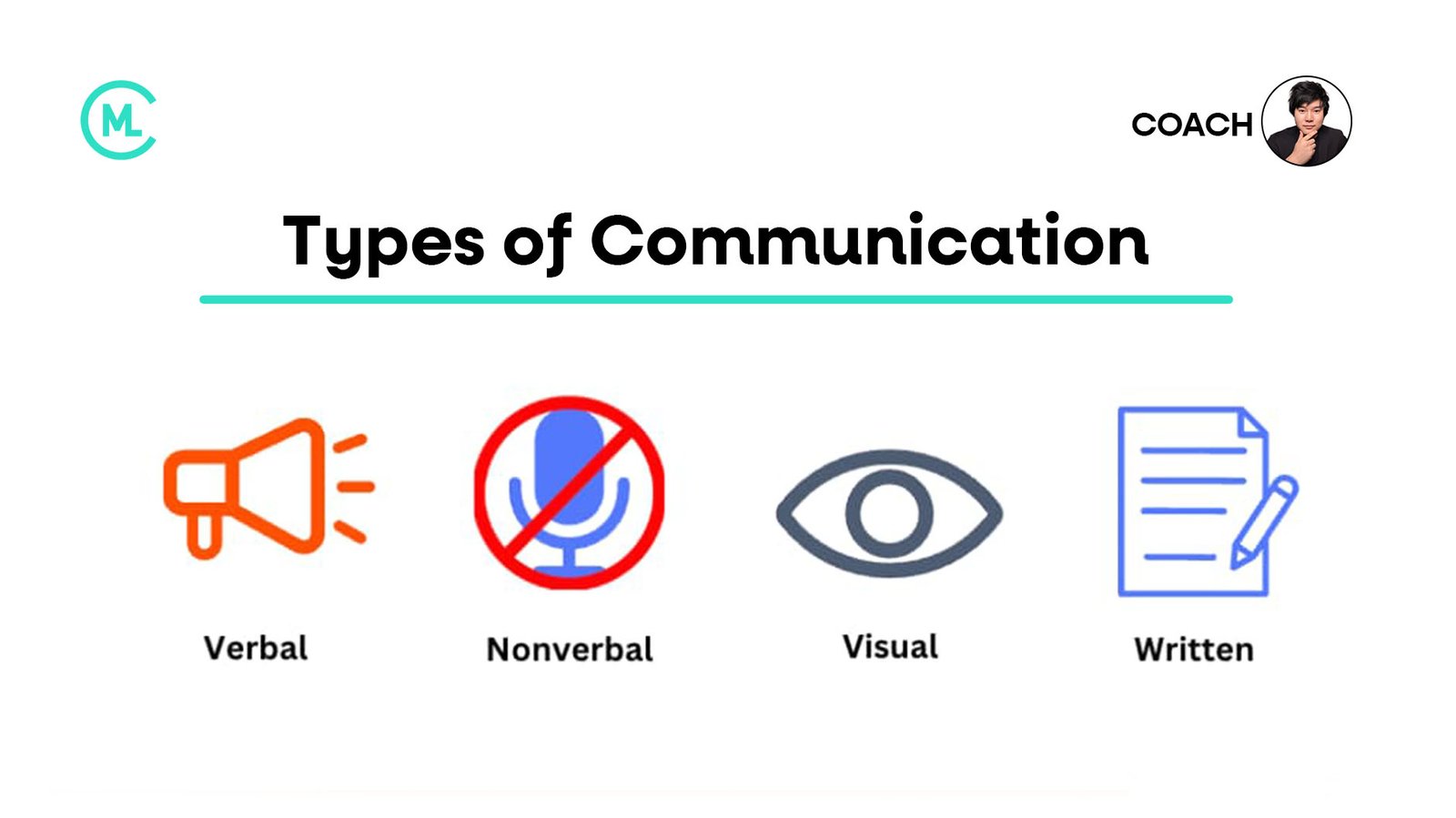
Interpersonal communication is 1 of the 5 levels of communication, alongside intrapersonal, group, public, and mass communication. The 5 levels of communication differ by the number of participants and the type of feedback. Interpersonal communication sits between intrapersonal and group communication, with 2 or more specific people and immediate feedback. Group communication adds more participants and shared goals, while public communication places 1 speaker in front of an audience. Mass communication reaches large audiences through media channels, such as television, radio, and social media, with little or no direct feedback. Interpersonal communication draws on all 4 main types of communication: verbal, nonverbal, written, and visual communication.
How Does the Communication Process Work Between Two People?
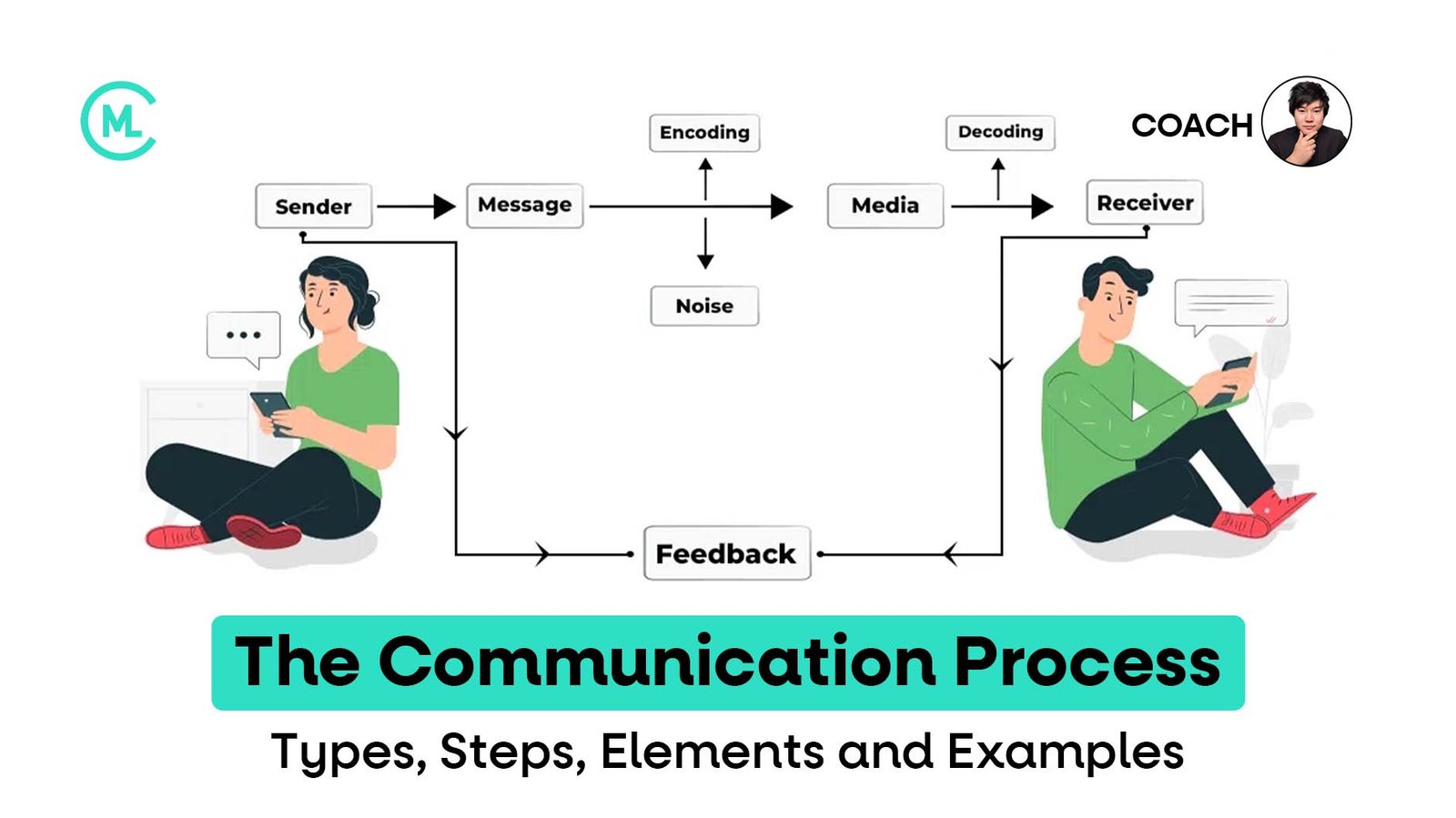
Between 2 people, the communication process works as a transactional exchange of 5 steps: idea formation, encoding, transmission, decoding, and feedback. In face-to-face interpersonal communication, both people send and receive messages at the same time. A listener’s nod acts as feedback while the speaker is still talking. Misunderstandings between 2 people usually start at the decoding step, when the listener attaches a different meaning to the words. Clarifying questions at the feedback step repair the misunderstanding before the misunderstanding grows into conflict.
Which Elements of Communication Shape Interpersonal Communication?
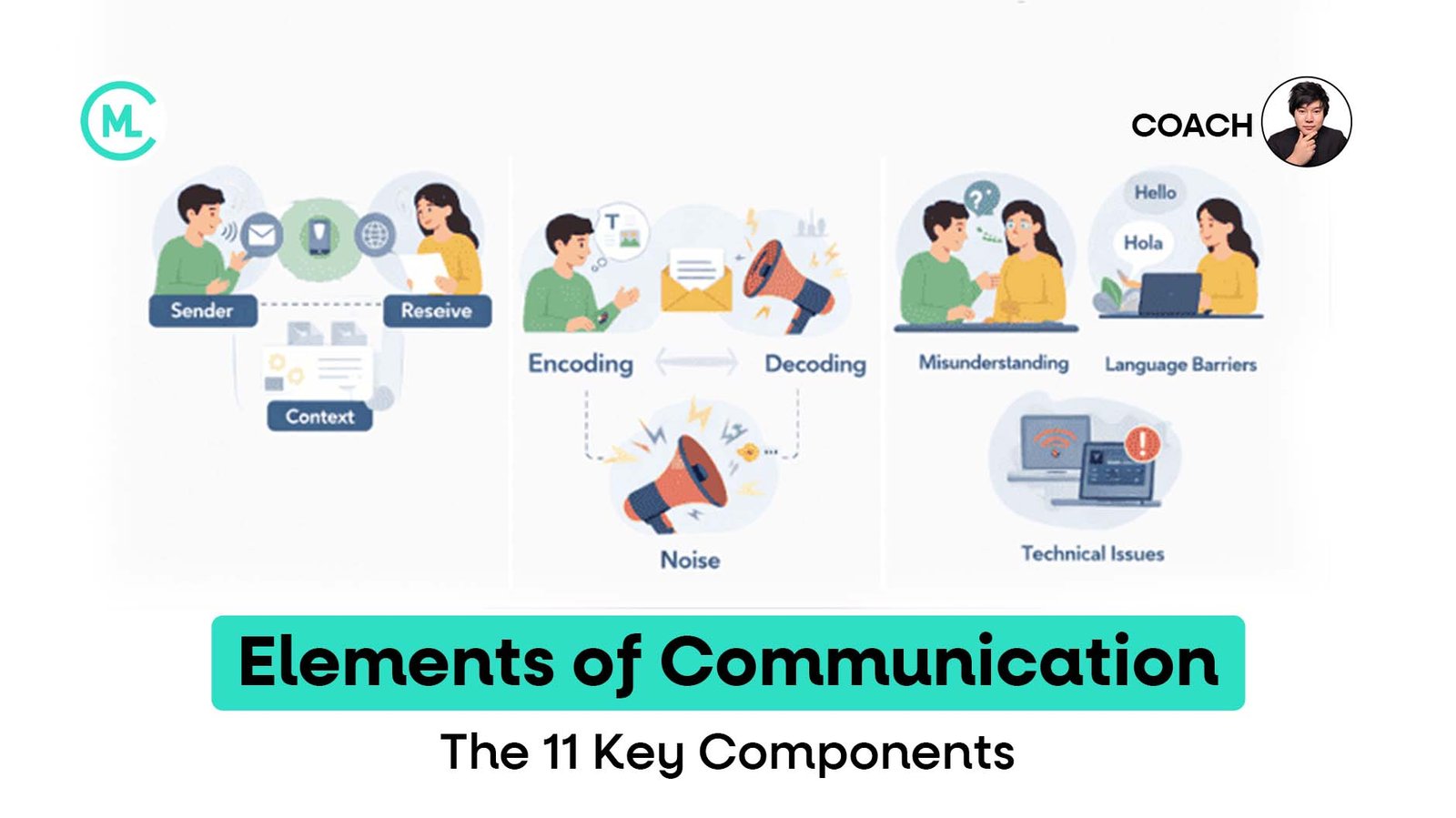
All 11 elements of communication shape interpersonal communication, and the relationship between the 2 people becomes part of the context. The 11 elements include 8 core elements, such as the sender, message, channel, and feedback, and 3 situational components: context, environment, and field of experience. Shared history widens the overlap between fields of experience in close relationships. Noise, such as a loud room or a stressful day, distorts interpersonal messages in the same way as any other exchange.
What Is the Difference Between Interpersonal Communication and Interpersonal Skills?
Interpersonal communication is the exchange of messages between people, while interpersonal skills are the abilities that make the exchange effective. Interpersonal skills include communication skills and broader people skills, such as teamwork, patience, and reliability. Strong interpersonal skills improve the quality of every interpersonal exchange. Interpersonal communication describes what happens between 2 people, and interpersonal skills describe how well each person handles the exchange. Interpersonal skills turn the importance of communication into stronger relationships.
How Does Interpersonal Communication Work in Romantic Relationships?
In romantic relationships, interpersonal communication builds trust and intimacy through self-disclosure, active listening, and repair after conflict. John Gottman’s research at the University of Washington found that stable couples maintain about 5 positive interactions for every 1 negative interaction during conflict. Gottman identified 4 communication patterns that predict relationship breakdown: criticism, contempt, defensiveness, and stonewalling. Repair attempts, such as a calm apology or a gentle joke during an argument, stop negative patterns from escalating. The definition, skills, types, and examples of interpersonal communication apply to every relationship, from a first date to a long marriage. More guides on communication are available in the Knowledge Hub.
Related guides
 Interpersonal SkillsInterpersonal Skills: Definition, Meaning, Types and Examples
 Communication ProcessThe Communication Process: Types, Steps, Elements and Examples
 Elements of CommunicationElements of Communication: The 11 Key Components
 Types of CommunicationTypes of Communication: Verbal, Nonverbal, Written and Visual With Examples