
Importance of Communication: 10 Reasons Why Communication Matters
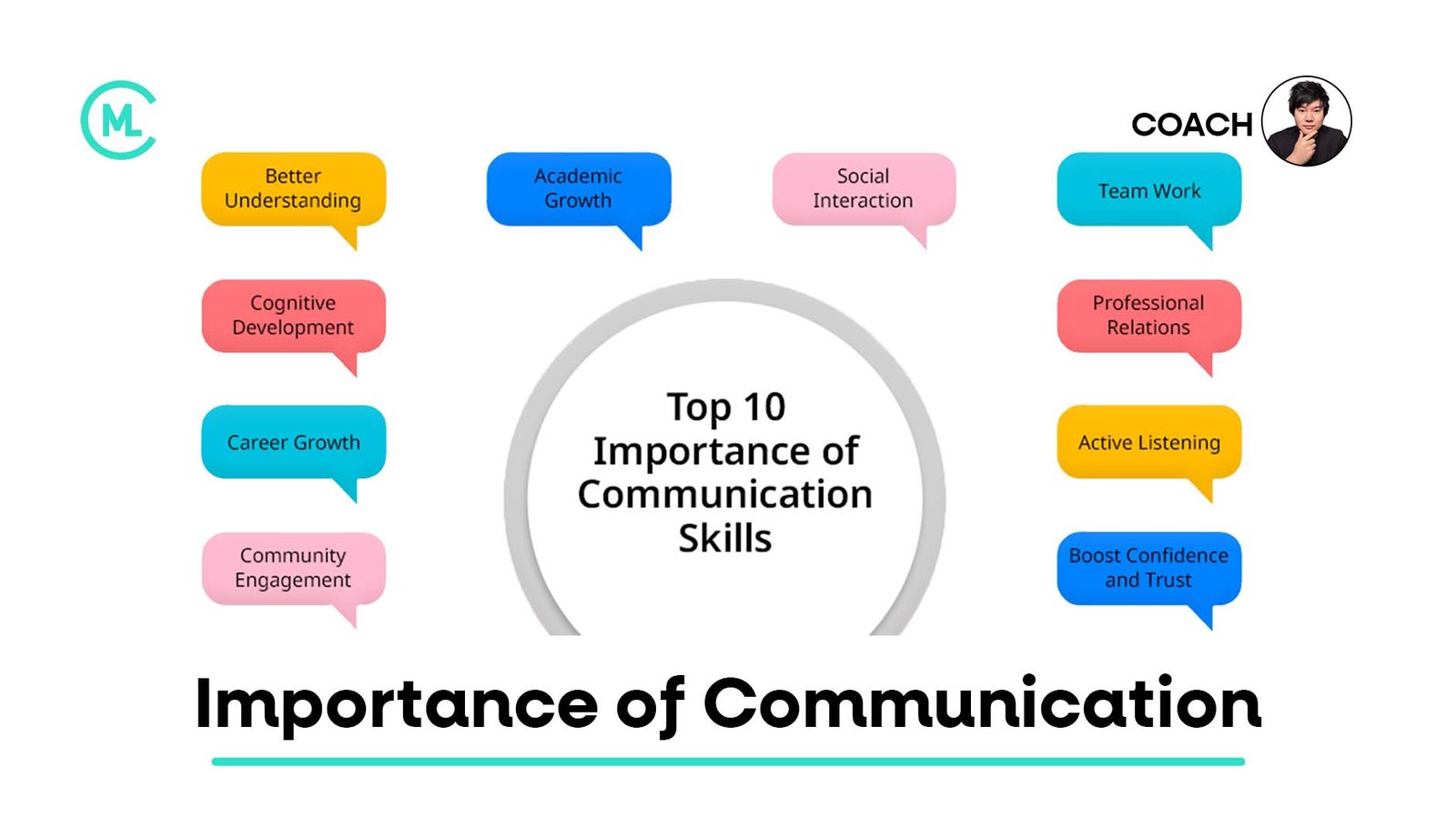
The importance of communication lies in the role of communication as the foundation of every relationship, team, and community, because communication lets people share meaning, solve problems, and connect. Communication builds trust, resolves conflict, deepens relationships, reduces misunderstandings, improves teamwork, supports better decisions, boosts career growth, increases confidence, protects wellbeing, and strengthens social connection. Communication matters in everyday life, in romantic relationships and families, in the workplace, in education, and in healthcare. Every personal and professional goal depends on the ability to communicate, so the importance of communication reaches every part of life.
10 Reasons Why Communication Is Important
The 10 main reasons why communication is important are that communication builds trust, resolves conflict, deepens relationships, reduces misunderstandings, improves teamwork, supports better decisions, boosts career growth, increases confidence, protects wellbeing, and strengthens social connection. The benefits of communication reach every area of life, from a first date to a board meeting. The advantages of good communication skills grow over time, because each successful conversation makes the next conversation easier. The 10 reasons why communication is important are below.
1. Builds Trust
Communication builds trust because honest, consistent messages show that a person’s words match the person’s actions. Open and honest communication tells the other person what to expect, and kept promises turn expectations into trust. A friend who calls ahead when plans change earns more trust than a friend who stays silent. A manager who explains the reasons behind a decision earns more trust than a manager who only gives orders. Trust also helps build rapport between new acquaintances, because early honesty signals that the relationship is safe. Once trust exists, people share information more freely, which makes every later conversation easier.
2. Resolves Conflict
Communication resolves conflict by letting both sides express needs calmly and find a shared solution. Calm conversations address issues before the issues escalate into resentment or lasting damage. A couple who talks about a disagreement over money on the same day avoids weeks of silent tension. Coworkers who discuss a missed deadline openly find the cause and fix the process. Conflict without communication grows, while conflict with communication often ends in a stronger relationship. “I” statements, such as “I feel worried when bills arrive late,” keep the focus on the problem instead of on blame.
3. Deepens Relationships
Communication deepens relationships through self-disclosure, active listening, and shared experiences that build emotional closeness. Small personal shares, such as a favorite memory or a current worry, invite the other person to share at the same depth. Active listening shows that the personal share is safe. Repeated honest conversations turn acquaintances into friends and partners into close companions. Deep relationships depend on conversations that go beyond small talk. Questions about hopes, fears, and values move a conversation from facts to feelings.
4. Reduces Misunderstandings
Communication reduces misunderstandings when clear messages and feedback confirm that the receiver understood the message as intended. Clear and concise messages leave little room for guesswork. Feedback, such as a short summary or a clarifying question, confirms that the receiver received and understood the message. A team that repeats the next steps at the end of a meeting prevents 3 people from doing the same task. A partner who asks “Did you mean tonight or tomorrow?” prevents a missed dinner. Small clarifying questions cost seconds and save hours of confusion.
5. Improves Teamwork
Communication improves teamwork by giving every team member the same goals, information, and expectations. Teams that share information openly coordinate work, avoid duplication, and support each other. Google’s Project Aristotle, a 2015 study of more than 180 teams, ranked psychological safety as the strongest factor in team effectiveness, and psychological safety depends on open communication. Team members who feel safe to speak up share ideas and report problems early. Regular team meetings and shared documents keep every member working from the same information.
6. Supports Better Decisions
Communication supports better decisions because shared information and different perspectives reveal options and risks that 1 person misses. Open communication allows for fully informed decisions in families, teams, and organizations. A family that discusses a move together considers school, work, and budget at the same time. A leadership team that listens to frontline employees learns about problems before the problems grow. Decisions made in silence miss information that a single conversation provides. Groups that invite disagreement before a decision avoid the blind spots of groupthink.
7. Boosts Career Growth
Communication boosts career growth because employers rank communication among the most wanted skills for hiring and promotion. LinkedIn’s 2024 list of the most in-demand skills ranked communication as the top skill among employers. Clear communicators lead meetings, explain ideas to clients, and represent the company in a professional way. Strong communication skills help people move from individual roles into leadership roles. Communication skills also transfer across jobs and industries, so communication skills keep career options open. Job interviews, salary negotiations, and performance reviews all reward clear and confident communication.
8. Increases Confidence
Communication increases confidence because successful conversations show a person that personal ideas and needs deserve attention. Each clear request, honest opinion, or calm disagreement builds self-trust. Confident communicators ask for personal needs directly, and direct requests support self-advocacy and personal growth at work and in relationships. A person who practices speaking up in small meetings gains the confidence to present to larger groups. Communication and confidence grow together, so practice in 1 area strengthens the other. Social confidence also helps on first dates and in new friendships, where the first conversation shapes the first impression.
9. Protects Mental and Physical Wellbeing
Communication protects mental and physical wellbeing because expressing emotions and receiving support lower stress. A 2010 meta-analysis by Julianne Holt-Lunstad, Timothy Smith, and Bradley Layton reviewed 148 studies and found that people with stronger social relationships had a 50% greater likelihood of survival over the study periods. The Harvard Study of Adult Development, which has followed participants since 1938, found that close relationships predict long-term health and happiness more strongly than wealth or fame. Talking through a problem with a trusted friend reduces stress and helps a person find a way forward. Naming an emotion out loud, such as “I feel overwhelmed,” often reduces the intensity of the emotion.
10. Strengthens Social Connection
Communication strengthens social connection and reduces loneliness by keeping people in regular contact with friends, family, and community. The US Surgeon General’s 2023 advisory Our Epidemic of Loneliness and Isolation reported that about 1 in 2 US adults experience loneliness. Regular calls, messages, and visits keep relationships active across distance and busy schedules. Social connection gives people a sense of belonging, and belonging depends on communication. Short, regular contact, such as a weekly call with a parent, protects relationships better than rare long visits.
What Is the Importance of Communication?
The importance of communication is the value communication creates by letting people share information, ideas, and feelings, build relationships, and work together. Communication is the process of understanding and sharing meaning, a definition from communication scholars Judy Pearson and Paul Nelson in 2000. The definition of communication shows why communication matters: shared meaning is the starting point for every relationship and every team.
Communication is essential in personal and professional life. Communication helps people give and receive information, express emotions, and understand other points of view. Many writers describe communication as the lifeblood of human interaction, because relationships, families, and organizations stop functioning when communication stops. Communication also shapes self-image, because word choice, tone of voice, and body language reveal the self-image of the speaker. Communication styles, such as passive, aggressive, passive-aggressive, and assertive, show how a person balances personal needs with the needs of others. The importance of communication therefore covers both the words people choose and the way people deliver the words.
Why Do Humans Need to Communicate?
Humans communicate because communication meets the basic human needs to belong, to feel understood, and to cooperate with others. Psychologists Roy Baumeister and Mark Leary described the need to belong in 1995 as a fundamental human motivation that drives people to form and keep close relationships. The drive to communicate starts at birth. A 1980 study by Anthony DeCasper and William Fifer found that newborns preferred the sound of the mother’s voice within days of birth. Communication lets people meet physical needs, share knowledge, and build the relationships that support survival and wellbeing.
Are Communication Skills Learned?
Yes, people learn communication skills, because people build vocabulary, listening habits, and social awareness through practice and feedback. Children learn communication skills from parents, teachers, and friends, through conversations, word games, and stories. Adults keep learning communication skills through new jobs, new relationships, and deliberate practice. The drive to communicate is natural, but skilled communication takes practice. People who practice active listening, clear speaking, and calm disagreement improve communication skills at any age.
Why Is Communication Important in Everyday Life?
Communication is important in everyday life because people use communication to meet daily needs, share experiences, solve problems, and connect with others. The importance of communication in daily life shows in dozens of small exchanges every day. A person orders coffee, asks a colleague for help, texts a friend about weekend plans, and describes symptoms to a doctor. Each exchange depends on clear words, attentive listening, and nonverbal cues. Everyday communication also builds the small moments of connection, such as a greeting to a neighbor, that make communities feel safe and friendly. Non-verbal communication, such as a smile, a nod, or a wave, carries much of everyday communication without a single word. Clear everyday communication also prevents small frustrations, such as a wrong coffee order or a missed pickup time.
Why Is Communication Important in Relationships?
Communication is important in relationships because communication creates trust, emotional safety, and mutual understanding between people. The importance of communication in relationships shows in every healthy partnership, friendship, and family. Communication forms the foundation of a healthy relationship, because communication allows people to understand, support, and connect with each other. Healthy communication makes both partners feel heard, which builds trust and emotional safety. Unspoken expectations, on the other hand, create misunderstandings and resentment, because no partner reads the other partner’s mind. Partners who share needs directly, such as time together, help with chores, or space to recharge, avoid the disappointment of silent hopes.
Why Is Communication Important in Romantic Relationships?
Communication is important in romantic relationships because open communication predicts relationship satisfaction and helps couples repair conflict. John Gottman’s research at the University of Washington found that stable couples maintain about 5 positive interactions for every 1 negative interaction during conflict. Research on couples links positive communication early in a relationship with higher relationship satisfaction later. Couples who share appreciation, ask open questions, and repair arguments with calm apologies build closeness over time. Communication in romantic relationships also covers difficult topics, such as money, family, and future plans, and honest conversations about difficult topics prevent long-term resentment.
Why Is Communication Important in Friendships and Families?
Communication is important in friendships and families because regular, honest conversations keep people close across distance, conflict, and change. Friendships fade without regular contact, and a simple message or call keeps a friendship active. Communication in families shapes identity and emotional security, because parents model communication patterns that children repeat in adult relationships. Parents who listen to children and name emotions teach children to express feelings with words instead of behavior. Family conversations about values, plans, and problems help every family member feel included.
Why Is Communication Important in the Workplace?
Communication is important in the workplace because communication prevents tension, aligns teams, and supports productivity and employee engagement. The importance of communication in the workplace shows in clear goals, smooth teamwork, and fewer mistakes. The importance of communication in business also extends to clients, partners, and the public, because every email, meeting, and presentation represents the company. Employees who understand priorities and feel heard stay more engaged with the work. Business communication that is clear, timely, and respectful saves time and money across the organization. Customers also judge a company by communication: a clear reply to a complaint keeps a customer, while a vague reply loses 1.
Why Is Communication Important in an Organization?
Communication is important in an organization because every management function, including planning, organizing, leading, and controlling, depends on communication. The management functions turn goals into action only when managers and employees share the same information. The importance of communication in an organization shows in every plan that managers share and every report that employees send. Chester Barnard, in the 1938 book The Functions of the Executive, described communication as a central responsibility of every executive. Organizational communication flows in 5 directions: downward from managers, upward from employees, laterally between colleagues, diagonally across departments, and externally to clients and partners. Each direction keeps a different part of the organization informed and aligned.
Why Is Communication Important in Leadership?
Communication is important in leadership because leaders turn a vision into action through clear goals, honest feedback, and listening. The importance of communication in leadership shows when a leader explains the reasons behind a decision and invites questions. Amy Edmondson’s research on psychological safety, published in 1999, showed that teams learn more when members feel safe to speak up. Leaders create psychological safety by listening without judgment and thanking people for raising problems. Leaders who communicate clearly earn trust, reduce rumors, and keep teams focused during change. Regular one-on-one meetings give leaders a direct view of each employee’s goals, worries, and ideas.
Why Is Communication Important in Remote Work?
Communication is important in remote work because distributed teams lose the hallway conversations and nonverbal cues that keep office teams aligned. The importance of communication in remote work grows with every team that spreads across cities and time zones. Remote teams depend on written documentation, clear channel choices, and regular video calls. Chat suits quick questions, email suits records, and video calls suit complex or sensitive topics. Regular check-ins replace the casual updates that office workers share in passing. Written decisions and meeting notes give remote team members a shared record across time zones.
Why Is Communication Important in Education?
Communication is important in education because teaching and learning depend on clear explanations, questions, and feedback between teachers and students. The importance of communication in education shows in every lesson, assignment, and parent-teacher meeting. Teachers who explain ideas clearly and check for understanding help students learn faster. Students who ask questions and discuss ideas with classmates remember more. Written communication, such as assignments and feedback on assessments, supports learning outside the classroom. Communication between teachers and parents helps families support learning at home. Students who practice presentations and group discussions build communication skills that serve every future job.
Why Is Communication Important in Healthcare?
Communication is important in healthcare because clear communication between doctors, nurses, and patients improves diagnosis, safety, and patient outcomes. The importance of communication in healthcare shows in every patient handoff and every conversation about symptoms and treatment. The Joint Commission, which accredits US hospitals, identifies communication failures as a leading root cause of serious patient safety events. Patients who understand a diagnosis and a treatment plan follow the plan more closely. Doctors who listen carefully gather the details that lead to accurate diagnoses. Structured handoff methods, such as SBAR (situation, background, assessment, recommendation), help nurses and doctors share patient information clearly between shifts.
What Happens When Communication Fails?
When communication fails, people face misunderstandings, conflict, mistakes, lost trust, and loneliness. Poor communication can lead to small problems that grow into large problems over time. The effects of poor communication show up in homes, offices, schools, and hospitals. The effects of poor communication are below, as the 5 main consequences of miscommunication.
- Misunderstandings: Vague or incomplete messages leave people guessing, and wrong guesses lead to wrong actions.
- Conflict: Unspoken frustration builds into arguments, resentment, and broken relationships.
- Mistakes: Missing information causes errors at work, in healthcare, and in daily tasks.
- Lost trust: Broken promises and unclear messages make people doubt each other’s intentions.
- Loneliness: Lack of regular communication leaves people isolated, even when other people live nearby.
How Does Technology Change the Importance of Communication?
Technology raises the importance of communication because email, chat, and video calls multiply the number of messages while removing many nonverbal cues. The importance of communication in technology-driven workplaces grows as more conversations move to screens. Body language, facial expressions, and tone of voice reinforce or contradict spoken words, and text-based messages remove all 3 cues. A 2005 study by Justin Kruger and Nicholas Epley found that email senders overestimated how accurately receivers identified the intended tone of an email. Richard Daft and Robert Lengel’s media richness theory recommends rich channels, such as face-to-face conversation and video calls, for complex or emotional messages. Technology also connects people across distance, so families and friends in different countries stay in daily contact through messages and video calls.
Which Communication Skills Make Communication Effective?
Active listening, clarity, empathy, and the 7 Cs of communication make communication effective, so the importance of communication turns into real results. Effective communication means that the receiver understands the message the way the sender intended. Communication alone does not guarantee the 10 benefits; effective communication delivers the benefits. The importance of communication skills shows in every benefit above: trust, teamwork, and wellbeing all depend on good communication skills. The 7 Cs of communication, clear, concise, concrete, correct, coherent, complete, and courteous, give people a simple checklist for every important message. Active listening completes the checklist, because the listener confirms the meaning before a response. Empathy adds warmth, so the receiver feels respected as well as informed.
How Do Barriers Reduce the Benefits of Communication?
Barriers reduce the benefits of communication by distorting messages, so trust, teamwork, and understanding suffer. The barriers to communication include physical, emotional, language, cultural, and technological barriers. A noisy room hides key words, and strong emotions turn neutral words into criticism. Barriers to effective communication explain why good intentions sometimes produce poor results. Emotional barriers damage trust most, while organizational barriers, such as silos and rigid hierarchy, damage teamwork most. Active listening, plain language, and the right channel remove most barriers. Each removed barrier restores 1 of the 10 benefits, such as trust after a misunderstanding or teamwork after a conflict.
How Does the Communication Process Create Shared Meaning?
The communication process creates shared meaning through 5 steps: idea formation, encoding, transmission, decoding, and feedback. Every step uses the 11 elements of communication, including the sender, message, channel, receiver, and feedback. Shared meaning appears when the receiver decodes the message the way the sender encoded the message. The field of experience, 1 of the 3 situational components, explains why close friends understand each other with fewer words than strangers. Feedback confirms the shared meaning and starts the next exchange. Noise, such as a distraction or a strong emotion, breaks the process at any step, so feedback acts as the safety check of every conversation.
Which Types of Communication Matter Most in Daily Life?
Verbal and nonverbal communication matter most in daily life, because most daily exchanges happen face to face or by voice. The 4 main types of communication are verbal, nonverbal, written, and visual communication. Written communication, such as text messages and emails, fills the gaps between face-to-face conversations. Nonverbal communication adds the emotional layer, so a warm tone or a smile turns a simple message into a caring message. Visual communication, such as charts and signs, makes complex information easy to understand at a glance. Most important messages combine several types, such as a conversation supported by a follow-up text.
Why Does Interpersonal Communication Matter Most for Relationships?
Interpersonal communication matters most for relationships because interpersonal communication is the level at which people build trust and closeness. Conversations between partners, friends, and family members shape the quality of every close relationship. Interpersonal communication also offers the fastest feedback of any level, so misunderstandings get a chance to clear up in the same conversation. Interpersonal skills, such as active listening, empathy, and emotional intelligence, turn interpersonal communication into deep connection. Small daily conversations, such as asking about a partner’s day, build the trust that carries relationships through difficult times.
How Do the Levels of Communication Show the Importance of Communication?
The levels of communication show the importance of communication at every scale, from self-talk to mass media. Intrapersonal communication shapes confidence, interpersonal communication shapes relationships, group communication shapes teams, public communication shapes communities, and mass communication shapes society. Each level depends on the same basic skills: a clear message, an attentive listener, and honest feedback. The importance of communication, and the 10 reasons why communication matters, apply to every level of communication. More guides on communication are available in the Knowledge Hub.